

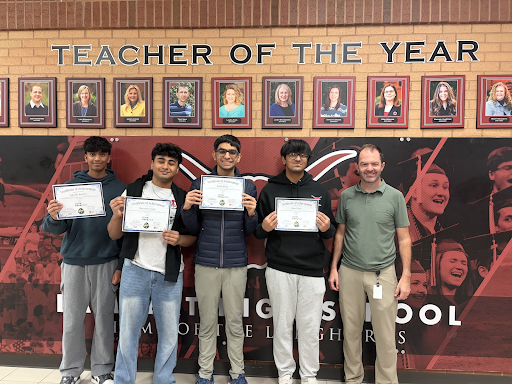
After weeks of hard work, commitment and dedication, The Lambert STEM in Space’s Zero Robotics Competition team placed 4th internationally for their outstanding work programming a set of robots for the International Space Station. The challenge’s theme this year was “Galactic Greenhouse”, and it revolved around planting food to keep astronauts fed while using limited resources wisely. In the final round of the challenge, teams were put into alliances with other schools and they had to do a final submission. STEM in Space was in the AstroEagles Alliance, and worked alongside teams from across the United States and Germany.
Being able to work with other teams internationally was a unique experience and the team benefited from it. There were technology and time-difference challenges, but all the teams worked together to overcome them.
“I think overall just being able to work with a global team has improved my worldview and has made me a lot more flexible in terms of communication,” team lead Shlok Bhatt said. “It was tough to manage [time differences] since testing is something you can only do on call.”
There were numerous technical challenges that they came across while working on such a complex project with many teams. The code needed to be dynamic and flexible to adjust for what crops would be planted in the simulation or how much to water them.
“It was hard to organize into one major code, because you can only submit one final code,” team member Shivansh Payak explained. “The big part was just the complexity and organizing people into specific parts, so we organized into different teams based on schools.”
Even though the process was challenging, the team’s hard work was definitely worth it. Not only did the team gain international recognition, they grew personally and professionally through building technical experience and soft skills. As the club hopes to compete again next year, they feel more equipped to know what to expect and what can help them succeed.
“This competition made me way more interested in robotics because I didn’t realize how complicated it would be,” team member Ashrith Batchu mentioned. “It also helped me manage my time more efficiently.”
The team had an incredible experience all in all with this competition, and are looking forward to doing it again next year. They hope to see more people join this year and bring their skillsets to help STEM in Space succeed.
“We want everyone to apply if they’re interested in space, specifically if they’re good at physics, computer science or robotics,” Bhatt noted.